
When most people start a business, they have a dream.
They dream about freedom.
They dream about making a difference.
They dream about creating something meaningful and building a better future for themselves and their family.
What they rarely dream about is stress, uncertainty, and feeling trapped by the very business they worked so hard to create.
Yet for many business owners, this becomes their reality.
The business grows, but so do the demands.
The responsibilities increase.
The decisions become more complex.
The pressure never seems to switch off.
Over the years, I’ve worked with many business owners who appeared successful from the outside but felt overwhelmed on the inside.
Some were making good money but had no time.
Some had built efficient businesses but lacked confidence in their decisions.
Others worked incredibly hard yet constantly worried about cashflow.
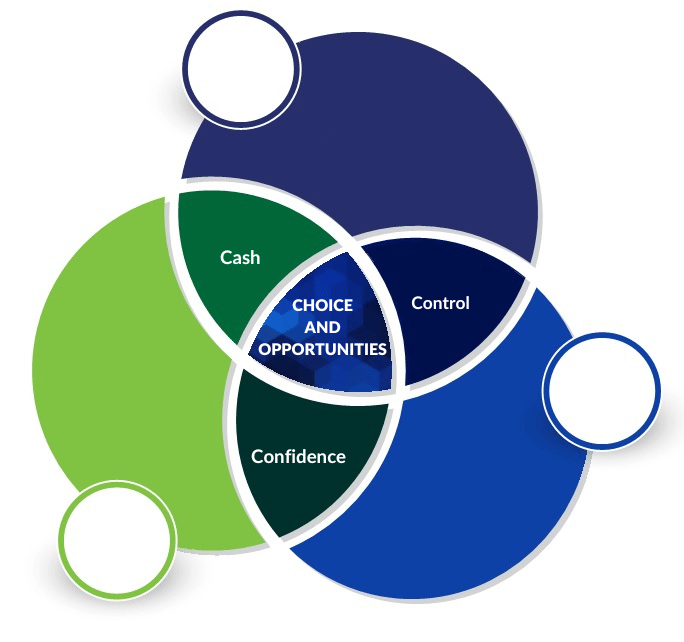
What became clear was that every business owner was ultimately motivated by three things:
Cash. Control. And Confidence.
These are what I call the Three Motivators of Business Growth.
They influence the decisions we make, the stress we experience, and the future we create.
The Three Motivators form an important part of The Thriving Blueprint, my business growth framework designed to help business owners move from struggling and surviving to living and thriving.
Understanding these motivators is the first step toward building a business that doesn’t just survive—but thrives.
Why Motivators Matter
Most business advice focuses on tactics.
Increase your marketing.
Improve your systems.
Hire more staff.
Raise your prices.
While these strategies can be valuable, they often focus on what to do rather than why it matters.
Motivators are different.
Motivators sit underneath our goals.
They explain what we are really trying to achieve.
For example, a business owner who says they want more revenue may actually be seeking greater financial security.
A business owner who wants to hire staff may really be looking for more time.
A business owner who constantly seeks advice may simply be searching for confidence in their decisions.
When we understand our true motivators, we gain clarity about what success actually looks like.
And when we build a business that supports those motivators, growth becomes more meaningful and sustainable.
Motivator #1: Cash
Cash is often the most obvious motivator.
Without cash, businesses struggle to survive.
Cash pays wages.
Cash pays suppliers.
Cash creates opportunities.
Cash provides security.
Yet many business owners have a complicated relationship with money.
Some avoid looking at their numbers because they find them overwhelming.
Others focus so heavily on revenue that they overlook profitability and cashflow.
Many discover that even when sales are increasing, there never seems to be enough money in the bank.
One of the most common frustrations I hear is:
“We’re busy, but it doesn’t feel like we’re getting ahead.”
The truth is that cash is about far more than income.
It’s about visibility.
It’s about understanding how money flows through your business.
It’s about knowing what is working, what isn’t, and where improvements can be made.
When cash is healthy, business owners have options.
They can invest in growth.
They can hire support.
They can weather unexpected challenges.
Most importantly, they gain peace of mind.
When cash is unhealthy, every decision feels harder.
Every expense becomes stressful.
Every setback feels amplified.
This is why improving cash isn’t simply a financial exercise.
It’s a quality-of-life improvement.
Motivator #2: Control
Many people start businesses because they want freedom.
Ironically, many end up with less freedom than they had as employees.
Their business depends on them.
Every decision requires their input.
Every problem lands on their desk.
Every day feels reactive.
Control is the motivator that addresses this challenge.
Control is about ownership of your time, energy, and attention.
It’s about creating a business that works with you rather than against you.
When control is low, business owners often experience:
- Long working hours
- Constant interruptions
- Difficulty taking holidays
- Decision fatigue
- Feelings of overwhelm
The business becomes something they manage rather than something they lead.
Many assume the solution is simply working harder.
But more effort rarely creates more control.
Control comes from structure.
It comes from systems.
It comes from clarity.
The businesses that create greater control are often not the businesses with the most resources.
They are the businesses with the best processes.
They understand how information flows.
They eliminate duplication.
They create consistency.
They build systems that reduce dependence on the business owner.
As control improves, something remarkable happens.
Stress decreases.
Decision-making improves.
Business owners begin to reclaim their time.
And that time can then be invested in growth, leadership, family, or personal wellbeing.
Motivator #3: Confidence
Confidence is the motivator most business owners underestimate.
When people hear the word confidence, they often think of personality.
But confidence in business has very little to do with personality.
Business confidence comes from clarity.
It comes from knowing where you are.
Knowing where you are heading.
And understanding the decisions required to get there.
When confidence is low, business owners often experience:
- Doubt
- Stress
- Indecision
- Anxiety about the future
- Constant second-guessing
Even simple decisions become difficult.
Every choice feels risky.
Every challenge feels larger than it really is.
This is why confidence and stress are so closely connected.
When confidence falls, stress rises.
When confidence rises, stress falls.
The most confident business owners are not necessarily the smartest people in the room.
They are simply the people with the greatest clarity.
They understand their numbers.
They understand their systems.
They understand their strategy.
Because they understand their business.
Confidence isn’t something you’re born with.
It’s something you build.
The Relationship Between Cash, Control and Confidence
The three motivators do not operate independently.
They are interconnected.
Improving one often improves the others.
For example:
When cash improves, confidence improves.
When confidence improves, decision-making improves.
When decision-making improves, control improves.
Likewise:
When control improves, stress reduces.
When stress reduces, confidence increases.
When confidence increases, better financial decisions are made.
This interconnected relationship is why many business problems cannot be solved in isolation.
A cashflow issue may actually be caused by poor systems.
A confidence issue may actually be caused by poor visibility.
A time issue may actually be caused by weak processes.
Understanding these connections allows business owners to focus on the root cause rather than the symptoms.
The Four Stages of Business Growth
Over time, I’ve observed that businesses tend to operate within four distinct stages.
Within The Thriving Blueprint Framework, businesses typically progress through four stages: Struggling, Surviving, Living and Thriving.
These stages are largely defined by the levels of Cash, Control, and Confidence present within the business.
Struggling
At this stage:
- Cash is under pressure
- Control feels impossible
- Confidence is low
Business owners often feel trapped in survival mode.
The future feels uncertain and every decision carries weight.
Surviving
At this stage:
- Cashflow remains tight
- Workloads remain high
- Stress remains constant
The business is functioning, but progress feels slow.
Many businesses remain stuck here for years because they never address the underlying causes.
Living
At this stage:
- Cash becomes more predictable
- Control improves
- Confidence begins to grow
The business creates stability and breathing room.
However, there is still significant opportunity for improvement.
Thriving
At this stage:
- Cash creates opportunities
- Time is used intentionally
- Confidence drives growth
The business becomes a platform for creating the future you want.
Rather than constantly reacting, you are proactively shaping your direction.
Moving Towards Thriving
The obvious question is:
How do you improve your Cash, Control, and Confidence?
This is where the drivers of growth become important. In The Thriving Blueprint Framework, three key drivers—Optics, Organised and Observations—help improve Cash, Control and Confidence over time.
Within The Thriving Blueprint framework, there are three drivers that influence the three motivators.
Optics (Numbers)
Understanding your numbers improves:
- Cash
- Control
The better visibility you have, the better decisions you make.
Organised (Systems)
Improving your systems improves:
- Cash
- Confidence
Good systems reduce waste, improve efficiency, and create consistency.
Observations (Strategy)
Improving strategic thinking improves:
- Control
- Confidence
Observation helps you identify opportunities, risks, and better ways of operating.
These drivers create the momentum that moves businesses through the four stages of growth.
What Does Thriving Really Mean?
Thriving looks different for every business owner.
For some, thriving means greater profit.
For others, it means more time with family.
For others, it means reducing stress and enjoying the journey again.
The destination may be different.
The motivators remain the same.
Every thriving business has healthy levels of Cash, Control, and Confidence.
Every thriving business has visibility, systems, and strategy.
Every thriving business is built intentionally.
The goal isn’t perfection.
The goal is progress.
If you’d like to see how the Three Motivators connect with the Three Drivers and the Four Stages of Growth, explore The Thriving Blueprint: A Framework for Business Growth.
Small improvements made consistently create extraordinary results over time.
Your Next Step
Every business owner is somewhere on the journey between struggling and thriving.
The first step is understanding where you are today.
How healthy is your cash position?
How much control do you have over your time?
How confident do you feel making decisions?
These questions reveal far more than your financial statements ever will.
Because business success is not simply measured by revenue.
It’s measured by the freedom, clarity, and confidence your business creates.
When Cash, Control, and Confidence work together, business becomes easier.
Growth becomes sustainable.
And thriving becomes possible.
Because every business begins with a dream.
But it is the right plan, supported by the right actions, that ultimately helps it thrive.
Ready to discover where your business stands?
Take the Business Health Quiz and find out whether your business is Struggling, Surviving, Living or Thriving—and learn the next step toward greater cash, control and confidence.
Explore The Thriving Blueprint Course
Continue Reading
If you enjoyed this article, you may also find these resources helpful: