
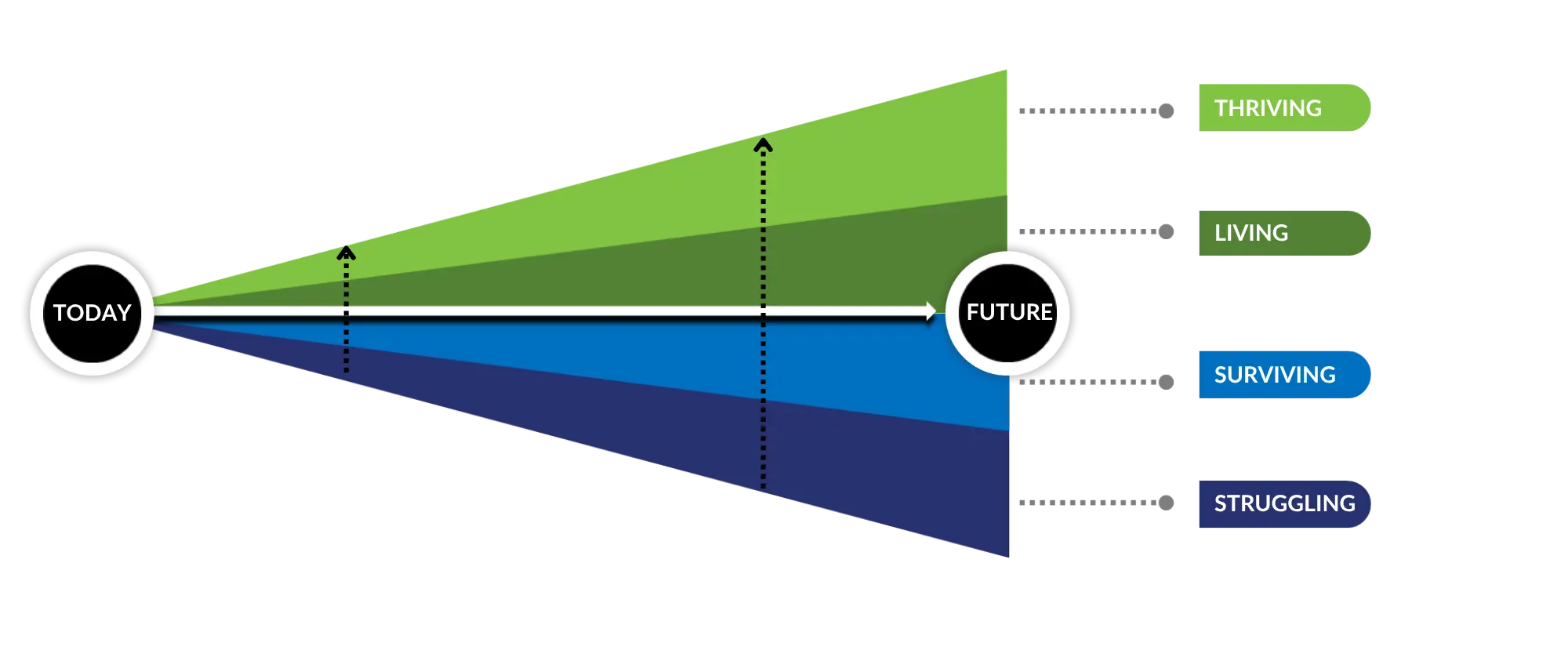
The Four Stages Every Business Owner Experiences
Understanding Where You Are Today to Create the Future You Want
Every Business Begins With a Dream
Every business starts with hope.
Hope that your idea will make a difference.
Hope that you’ll create something meaningful.
Hope that owning a business will give you more freedom, more flexibility and more choice.
You don’t start a business dreaming about cashflow problems.
You don’t imagine working late every night.
You don’t picture lying awake wondering how you’ll pay the next round of bills or whether you’re making the right decisions.
Yet these experiences are incredibly common.
Not because business owners lack ability.
Not because they aren’t working hard enough.
But because every business moves through different stages as it grows.
Some stages feel exciting.
Others feel exhausting.
Some bring confidence.
Others test your resilience.
The important thing to understand is this:
Every stage is temporary.
Where you are today is not where you have to stay.
That belief sits at the heart of The Thriving Blueprint Framework.
Every business owner has the opportunity to move forward with the right understanding, the right systems and the right strategy.
The first step is simply recognising where you are now.
Why Understanding Your Stage Matters
One of the biggest mistakes business owners make is comparing themselves with other businesses.
We compare our beginning with someone else’s middle.
Our struggles with someone else’s success.
Our challenges with someone else’s highlights.
The problem with comparison is that every business is playing a different game.
A business in its first three years has different challenges to a business operating for twenty years.
A business employing two people has different priorities to one employing fifty.
A business struggling with cashflow needs different advice to a business preparing for expansion.
There is no single piece of business advice that works for everyone.
The right advice depends on your current stage.
Understanding your stage gives you clarity.
Instead of asking, “Why isn’t my business like theirs?” , you begin asking, “What’s the next step for my business?”.
That is a much more powerful question.
Because progress doesn’t come from comparison.
It comes from understanding.
The Four Stages
Within The Thriving Blueprint, I describe four stages that every business owner experiences.
These aren’t based on turnover.
They aren’t based on profit.
They aren’t based on the number of staff you employ.
Instead, they’re based on something much more important:
How healthy your business feels.
The four stages are:
- Struggling
- Surviving
- Living
- Thriving
A business turning over $5 million can still be surviving.
A business turning over $500,000 can be thriving.
Why?
Because thriving isn’t determined by size.
It’s determined by the relationship between three important motivators:
- Cash
- Control
- Confidence
When those motivators improve, your business moves forward.
When they decline, your business can begin moving backwards.
Let’s start with the first stage.
Stage One – Struggling
No business owner sets out to struggle.
Yet almost every business experiences this stage at some point.
Sometimes it’s at the beginning.
Sometimes after rapid growth.
Sometimes following an unexpected event.
Economic changes.
Personal circumstances.
Losing a major client.
Unexpected expenses.
Every business has moments where things become harder than expected.
Being in the Struggling stage isn’t a sign of failure.
It’s a signal that your business needs attention.
What It Looks Like
Businesses in this stage often experience several challenges at the same time.
Cashflow feels tight.
Bills seem to arrive faster than payments.
You find yourself checking the bank account more often than you’d like.
Every unexpected expense creates anxiety.
Time also feels scarce.
You’re constantly putting out fires.
One problem is solved only for another to appear.
Long hours become normal.
Planning for the future feels impossible because today requires all your attention.
Confidence begins to suffer.
Simple decisions suddenly feel difficult.
You question yourself more often.
You wonder whether you’re doing enough.
Even small setbacks begin to feel overwhelming.
None of these challenges exist in isolation.
They feed each other.
Tight cashflow creates stress.
Stress reduces confidence.
Reduced confidence makes decision-making harder.
Poor decisions create more pressure on cashflow.
The cycle continues.
What It Feels Like
Business owners rarely describe this stage using financial language.
Instead they say things like:
“I’m exhausted.”
“I don’t know what to fix first.”
“I’m working harder than ever but getting nowhere.”
“I feel like I’m constantly behind.”
“Everything feels urgent.”
These comments reveal something important.
The challenge isn’t simply financial.
It’s emotional.
Business ownership becomes reactive instead of rewarding.
The dream that once inspired you begins to feel very distant.
The Biggest Mistake
When business owners feel overwhelmed, the natural response is to try to fix everything at once.
They:
- change pricing
- change software
- redesign their website
- employ staff
- reduce staff
- spend more on marketing
- spend less on marketing
Every problem feels equally important.
Unfortunately, trying to solve everything usually means solving nothing particularly well.
Progress comes from identifying the next most important step—not every step.
The Biggest Opportunity
Although the Struggling stage feels difficult, it also presents an incredible opportunity.
Awareness.
Because once you recognise where you are, you can begin making different decisions.
You stop reacting.
You start observing.
You stop asking,
“How do I fix everything?”
And begin asking,
“What’s the next improvement that will make the biggest difference?”
That single shift in thinking often becomes the beginning of meaningful progress.
Helen’s Insight
One of the biggest misconceptions about struggling businesses is that they’re failing.
In my experience, that’s rarely true.
Most struggling businesses don’t have one catastrophic problem.
They have dozens of small issues that have quietly accumulated over time.
A pricing decision made years ago.
A process that no longer works.
Customers taking longer to pay.
Information stored in too many places.
Margins slowly reducing.
Each issue seems manageable on its own.
Together, they create a business that feels overwhelming.
The good news is that progress usually works the same way.
You don’t need one miracle solution.
You need a series of small improvements made consistently.
That’s why I encourage business owners to stop looking for the perfect answer.
Instead, look for the next right step.
Those small steps have an incredible way of building momentum.
Moving Beyond Struggling
Businesses don’t move out of the Struggling stage through luck.
They move forward by creating greater visibility, stronger systems and better decision-making.
Within The Thriving Blueprint, these improvements come from strengthening three key drivers:
- Optics – understanding the numbers and gaining financial clarity.
- Organised – building systems that reduce stress and save time.
- Observations – stepping back to think strategically instead of reacting constantly.
These drivers improve the three motivators—Cash, Control and Confidence—which gradually move your business towards the next stage.
You don’t have to solve everything today.
You simply have to start moving in the right direction.
| Stage | Cash | Control | Confidence | Primary Focus |
| Struggling | Low | Low | Low | Gain clarity and stabilise |
| Surviving | Improving but inconsistent | Limited | Growing | Build systems and create space |
| Living | Healthy | Good | Strong | Refine, delegate and grow intentionally |
| Thriving | Strong | High | High | Continue improving and creating opportunities |
Stage Two – Surviving
If the Struggling stage feels like you’re constantly trying to stay afloat, the Surviving stage is different.
From the outside, everything appears fine.
The business is still operating.
Customers are still buying.
The bills are mostly being paid.
Friends and family probably assume the business is doing well.
But underneath the surface, something doesn’t feel right.
The business owner is tired.
The days are full.
The weeks disappear.
Despite all the effort, progress feels slower than it should.
This is the stage where many business owners quietly become stuck.
Not because they aren’t capable.
Not because they lack ambition.
But because surviving slowly becomes normal.
What It Looks Like
Businesses in the Surviving stage often have enough work.
Sometimes they even have too much work.
Revenue is reasonably consistent.
Customers continue arriving.
Staff are busy.
The business appears healthy.
Yet behind the scenes, there are warning signs.
Cashflow feels unpredictable.
One good month is often followed by a difficult one.
There’s never quite enough financial breathing room.
The owner still carries most of the responsibility.
They approve every decision.
Answer every question.
Solve every problem.
Even when staff are employed, the business still depends heavily on the owner.
The result is constant busyness.
There’s always something waiting.
Always another email.
Another phone call.
Another issue demanding attention.
The business isn’t failing.
But it isn’t creating the freedom that was originally imagined.
What It Feels Like
Business owners in this stage often say things like:
- “We’re busy… but we’re not really getting ahead.”
- “I feel like I’m always working.”
- “The business couldn’t cope if I stepped away for very long.”
- “I don’t have time to improve things because I’m too busy running them.”
Those comments reveal an important truth.
The challenge isn’t usually a lack of effort.
It’s a lack of capacity.
Every day is consumed by operating the business.
Very little time remains to improve it.
The Hidden Trap of Surviving
This stage contains one of the greatest dangers in business ownership.
Comfort.
Not comfortable financially.
Comfortable operationally.
The business works well enough that nothing feels urgent enough to change.
Problems become accepted as “just part of business.”
Long hours become normal.
Stress becomes expected.
Cashflow fluctuations become routine.
The owner adapts instead of improving.
Years can quietly pass this way.
Many businesses never leave the Surviving stage because nothing appears broken enough to demand change.
Yet deep down, the owner knows something isn’t right.
Why Businesses Become Stuck Here
I’ve often wondered why so many businesses remain in this stage.
The answer usually isn’t capability.
It’s capacity.
Business owners are simply too busy solving today’s problems to build tomorrow’s business.
Every improvement gets postponed.
- “We’ll review our systems when things quieten down.”
- “I’ll look at the numbers next month.”
- “We’ll build better processes later.”
Unfortunately, later rarely arrives.
Busyness has a way of filling every available space.
Without intentionally creating time for improvement, the business continues operating exactly as it always has.
The Biggest Opportunity
The greatest opportunity in the Surviving stage isn’t working harder.
It’s creating space.
Space to think.
Space to observe.
Space to improve.
This is where many of the ideas within The Thriving Blueprint begin making a significant difference.
Better financial visibility.
Simpler systems.
Regular strategic reviews.
Small improvements that reduce friction throughout the business.
Rather than trying to overhaul everything, thriving businesses improve one process at a time.
Over months and years, those small improvements create remarkable momentum.
Helen’s Insight
One of the things I’ve noticed is that business owners often wear busyness as a badge of honour.
They tell themselves,
“If I’m busy, the business must be successful.”
But busyness and progress aren’t the same thing.
Some of the most successful business owners I’ve worked with actually appear quite calm.
Not because they have less to do.
Because they’ve built businesses that don’t rely on constant firefighting.
That’s the difference.
Busy businesses survive.
Intentional businesses thrive.
Moving Beyond Surviving
The transition from Surviving to Living usually begins with one decision.
Making time to improve the business instead of simply operating it.
This is where the three drivers become incredibly powerful.
Optics help you understand where improvements are needed.
Organised removes unnecessary complexity.
Observations create space for better decisions.
Each small improvement increases your Cash, your Control and your Confidence.
Gradually, the business begins working with you instead of against you.
| Stage | Cash | Control | Confidence | Primary Focus |
| Struggling | Low | Low | Low | Gain clarity and stabilise |
| Surviving | Improving but inconsistent | Limited | Growing | Build systems and create space |
| Living | Healthy | Good | Strong | Refine, delegate and grow intentionally |
| Thriving | Strong | High | High | Continue improving and creating opportunities |
Stage Three – Living
The Living stage is often overlooked.
Perhaps because it doesn’t sound particularly exciting.
Yet I believe it’s one of the most rewarding stages in business ownership.
This is the point where business begins giving something back.
The constant pressure starts to ease.
Confidence grows.
Cashflow becomes more predictable.
There is finally enough breathing room to think beyond next week’s problems.
Many owners describe this stage as the first time they genuinely enjoy owning their business again.
What It Looks Like
Businesses in the Living stage have developed a solid foundation.
Cashflow is generally healthy.
Systems are improving.
The owner no longer needs to make every small decision.
The team becomes more capable.
Information is easier to find.
Financial reports begin supporting decisions instead of creating confusion.
The business feels more stable.
There is less chaos.
Less urgency.
More intention.
Business owners begin asking different questions.
Instead of, “How do I survive?”. They begin asking, “How do I improve?”.
That change in thinking is incredibly significant.
What It Feels Like
Business owners often say:
“I finally feel like I’m getting somewhere.”
“The business isn’t perfect, but it’s much easier to manage.”
“I actually took a holiday without checking my emails every hour.”
“I’m enjoying the business again.”
Notice how different these conversations are from the earlier stages.
The business owner is no longer focused purely on solving problems.
They’re beginning to create opportunities.
The Risk of Living
Every stage brings new opportunities.
It also brings new risks.
For businesses in the Living stage, the greatest risk is complacency.
Because things are going well, it’s easy to stop improving.
Systems remain unchanged.
Processes become outdated.
Customer expectations evolve.
Competitors innovate.
Businesses that stop improving rarely remain in the Living stage forever.
Progress isn’t something we achieve once.
It’s something we continue choosing.
The Biggest Opportunity
The opportunity in this stage isn’t simply maintaining success.
It’s becoming intentional about growth.
Business owners begin investing more time in strategy.
They refine pricing.
Improve customer experiences.
Strengthen leadership.
Develop their people.
Enhance systems.
Growth becomes deliberate rather than accidental.
Helen’s Insight
One of my favourite conversations with business owners happens during this stage.
They often say something like,
“I didn’t realise business could actually feel like this.”
They’re surprised that they can finish work without feeling guilty.
That they can take a holiday.
That they can enjoy planning instead of constantly reacting.
That’s the moment I know the business is beginning to support the life they wanted when they first started.
Preparing for Thriving
The Living stage isn’t the destination.
It’s the foundation.
The work you’ve done improving Cash, Control and Confidence now creates something incredibly valuable.
Choice.
You have choices about where to invest.
Choices about how you spend your time.
Choices about the future you want to build.
And that’s exactly where the final stage begins.
| Stage | Cash | Control | Confidence | Primary Focus |
| Struggling | Low | Low | Low | Gain clarity and stabilise |
| Surviving | Improving but inconsistent | Limited | Growing | Build systems and create space |
| Living | Healthy | Good | Strong | Refine, delegate and grow intentionally |
| Thriving | Strong | High | High | Continue improving and creating opportunities |
Stage Four – Thriving
When people hear the word thriving, they often picture a business that has “made it.”
A large office.
A growing team.
Record profits.
Awards on the wall.
While those things may describe some thriving businesses, they don’t define what thriving really means.
In fact, I’ve met business owners with multi-million-dollar businesses who weren’t thriving at all.
They worked constantly.
Their cashflow was under pressure.
They felt trapped by the business they had built.
I’ve also worked with business owners running much smaller businesses who were genuinely thriving.
They had time with their families.
They enjoyed their work.
Their businesses generated healthy profits.
Their systems worked.
Most importantly, they felt in control.
That’s why, within The Thriving Blueprint, thriving isn’t measured by the size of your business.
It’s measured by the quality of your business—and the quality of the life it creates.
What Thriving Looks Like
Thriving businesses are rarely perfect.
Problems still arise.
Customers still leave.
Technology still fails.
Markets still change.
The difference is how the business responds.
Thriving businesses have created strong foundations.
Cashflow is healthy and predictable.
Systems support the team instead of slowing them down.
Business owners understand their numbers.
Decisions are made proactively rather than reactively.
Most importantly, the owner no longer feels like the business owns them.
Instead, they lead the business with purpose and confidence.
What It Feels Like
Business owners in this stage often say things like:
“I finally have choices.”
“I can see where the business is heading.”
“We’re making decisions because they’re right—not because we’re desperate.”
“I enjoy coming to work again.”
“The business supports my life instead of consuming it.”
Notice something important.
Very few of those comments mention money.
Money matters.
Healthy profit matters.
Strong cashflow matters.
But what thriving really creates is freedom.
Freedom to choose.
Freedom to think.
Freedom to grow.
Thriving Doesn’t Mean Stopping
One of the biggest misconceptions about thriving is that you’ve reached the finish line.
You haven’t.
Thriving isn’t a destination.
It’s a way of operating.
Thriving businesses continue learning.
Continue refining.
Continue observing.
They don’t improve because something is broken.
They improve because continuous improvement has become part of their culture.
Surviving businesses improve when they have to.
Thriving businesses improve because they choose to.
Helen’s Insight
One of the most inspiring moments for me is when a business owner realises they no longer spend every day reacting.
Instead of worrying about whether they’ll get through the week, they’re thinking about what they want their business to look like in three or five years.
That shift is powerful.
It’s no longer about survival.
It’s about possibility.
And that’s exactly what thriving should feel like.
| Stage | Cash | Control | Confidence | Primary Focus |
| Struggling | Low | Low | Low | Gain clarity and stabilise |
| Surviving | Improving but inconsistent | Limited | Growing | Build systems and create space |
| Living | Healthy | Good | Strong | Refine, delegate and grow intentionally |
| Thriving | Strong | High | High | Continue improving and creating opportunities |
Why Businesses Move Between the Stages
One of the questions I’m often asked is:
“What moves a business from one stage to the next?”
The answer isn’t one big breakthrough.
It’s not finding the perfect employee.
Landing one major client.
Or suddenly doubling your turnover.
Businesses move because they consistently improve the things that matter most.
Within The Thriving Blueprint, those improvements happen through two connected parts of the framework:
The Three Motivators.
And the Three Drivers.
Together, they create momentum.
The Three Motivators Drive Business Health
Throughout this website you’ve seen me refer to:
- Cash
- Control
- Confidence
These are the three motivators that shape every business owner’s experience.
When Cash is healthy, opportunities increase.
When Control improves, stress decreases.
When Confidence grows, better decisions follow.
These motivators influence one another constantly.
Imagine improving your cashflow.
Immediately you feel more confident.
Better confidence leads to stronger decisions.
Those better decisions often improve your sense of control.
One improvement creates another.
This is why thriving businesses don’t focus on money alone.
They improve all three motivators together.
If you’d like to understand this relationship in more detail, read The 3 Motivators Every Business Owner Needs, where I explain how Cash, Control and Confidence influence every stage of business ownership.
The Three Drivers Create Momentum
If the motivators describe where you want to go, the drivers explain how you get there.
Within The Thriving Blueprint, three drivers help move businesses through the stages.
Optics
Better visibility creates better decisions.
Understanding your numbers allows you to identify opportunities earlier, solve problems faster and improve cashflow before it becomes an issue.
You can’t improve what you can’t see.
Organised
Strong systems reduce friction.
Every unnecessary step removed from your business saves time, reduces stress and improves consistency.
Organised businesses don’t rely on memory.
They rely on systems.
Observations
Perhaps the most overlooked driver is observation.
Thriving business owners regularly step back.
They create space to think.
They review what’s changing.
They notice trends.
They identify opportunities before competitors do.
Observation turns information into insight.
Insight creates better strategy.
Why the Drivers Matter
Imagine trying to improve your business without understanding your numbers.
Or trying to improve your systems without ever reviewing whether they’re working.
Or making strategic decisions without taking time to observe what’s actually happening.
Each driver supports the others.
Together they improve Cash, Control and Confidence.
Over time, these small improvements compound.
One better process.
One better decision.
One better conversation.
One better habit.
Eventually those improvements become the difference between surviving and thriving.
Growth Isn’t Always Linear
One thing I think is important to remember is that businesses don’t always move neatly from one stage to the next.
Sometimes a thriving business experiences unexpected setbacks.
Economic downturns.
Health issues.
Losing a major client.
Changes in the market.
Life happens.
That doesn’t mean you’ve failed.
It simply means you’ve entered a different season.
Because the stages aren’t labels.
They’re indicators.
They’re a way of understanding where your business is today so you can make better decisions about tomorrow.
That’s why I encourage business owners to revisit these stages regularly.
Not to judge themselves.
But to recognise their progress.
Helen’s Insight
When I first developed The Thriving Blueprint, I realised something important.
Business ownership isn’t really about growing a business.
It’s about growing the person leading the business.
As your understanding grows…
Your decisions improve.
As your decisions improve…
Your business improves.
And as your business improves…
The opportunities available to you expand.
That’s why I believe thriving starts long before the numbers change.
It starts with the way you think.
The Journey Continues
Every business owner starts somewhere.
Some are struggling.
Some are surviving.
Some are living.
Some are thriving.
The important question isn’t:
“Which stage should I be in?”
The better question is:
“What’s the next step that will move me forward?”
Because progress is never created by comparing yourself with others.
It’s created by improving your own business, one decision at a time.
The Four Futures
One of the most powerful realisations a business owner can have is this:
The future isn’t something that happens to your business.
It’s something you create.
Every decision you make today influences where your business will be tomorrow.
Every improvement compounds.
Every delay also compounds.
That’s why, within The Thriving Blueprint, I don’t just talk about the four stages of business ownership.
I also talk about the Four Futures.
Each stage creates a different future.
The longer you remain in one stage, the greater the distance between where you are and where you could be.
Imagine two business owners.
Both recognise that their cashflow needs improving.
One decides to take action now.
The other puts it off until “things settle down.”
Fast forward twelve months.
The first owner has gradually improved their systems, understands their numbers, has healthier cashflow and feels more confident making decisions.
The second owner is still dealing with the same problems they had a year ago—only now they’re larger.
The gap between those two businesses has grown.
Not because one owner was smarter.
Not because they worked harder.
But because one chose to start.
Small actions, taken consistently, create dramatically different futures.
That’s why I encourage business owners to think beyond today’s challenges.
Ask yourself:
Where will my business be in twelve months if nothing changes?
Now ask:
Where could it be if I improved just one thing every month?
The answers to those two questions often reveal your future more clearly than any financial report.
Every Stage Has a Different Future
If You’re Struggling…
Your future begins with clarity.
You don’t need to solve everything this week.
You need to identify the next right step.
Improving your cashflow.
Understanding your numbers.
Building one better system.
Small improvements reduce pressure and create momentum.
If You’re Surviving…
Your future depends on creating space.
Space to think.
Space to improve.
Space to lead rather than constantly react.
This is often where business owners experience the biggest transformation because small improvements quickly compound.
If You’re Living…
Your future is built through intentional growth.
This is the time to refine your systems, strengthen your leadership and become more strategic.
Living is a wonderful place to be.
Thriving is what happens when you continue improving instead of becoming comfortable.
If You’re Thriving…
Your future becomes about contribution.
Thriving businesses don’t simply create profit.
They create opportunities.
They develop people.
They support communities.
They inspire other business owners.
They continue learning because they understand there is always another level of growth.
Progress Is More Important Than Perfection
One of the biggest obstacles I see is perfectionism.
Business owners often delay action because they want the perfect plan.
The perfect software.
The perfect strategy.
The perfect timing.
The truth is, perfection rarely arrives.
Progress is what creates thriving businesses.
Every invoice sent on time.
Every process improved.
Every financial report reviewed.
Every strategic conversation.
Each one is a small investment in the future of your business.
You don’t need to transform your business overnight.
You simply need to keep moving forward.
As the old saying goes:
“The best time to plant a tree was twenty years ago. The second-best time is today.”
I believe business works the same way.
The best time to improve your business may have been years ago.
The next best time is today.
Helen’s Insight
When I first started helping business owners, I thought my role was to improve their numbers.
Over time, I realised something much more important.
Better numbers are simply the outcome.
What we’re really improving is the confidence to make better decisions.
The control to enjoy running the business.
And the freedom to create the life they imagined when they first started.
That’s why I love seeing business owners move through these stages.
Not because their turnover increases.
But because they begin smiling again.
They become excited about their future.
They stop surviving and start creating.
For me, that’s what thriving really means.
Where Are You Today?
After reading about the four stages, you probably recognised yourself somewhere along the journey.
Perhaps you’re currently struggling with cashflow.
Perhaps you’re surviving but feeling constantly busy.
Perhaps your business is living, but you’re wondering how to take it to the next level.
Or perhaps you’re already thriving and looking for new ways to improve.
The important thing isn’t the stage.
It’s knowing what comes next.
Awareness is always the first step towards change.
Your Next Step
If you’re unsure which stage best describes your business, I’d encourage you to start with the Business Health Quiz.
In just a few minutes you’ll discover:
- Your current stage of business.
- Your strengths.
- The areas creating the biggest barriers to growth.
- The next practical steps to improve your Cash, Control and Confidence.
Once you understand where you are today, you’ll find it much easier to decide where to focus your energy.
And if you’re ready to take the next step, The Thriving Blueprint Course provides a practical, step-by-step roadmap for building a healthier, stronger and more enjoyable business.
Because thriving isn’t about working harder.
It’s about working with greater clarity, purpose and intention.
Frequently Asked Questions
What are the four stages every business owner experiences?
Within The Thriving Blueprint, the four stages are:
- Struggling
- Surviving
- Living
- Thriving
These stages describe the overall health of your business based on your levels of Cash, Control and Confidence—not your turnover or business size.
Can a successful business still be surviving?
Absolutely.
A business can generate significant revenue while the owner experiences poor cashflow, long hours and high stress.
Success isn’t measured by turnover alone.
A thriving business supports both the business owner and the life they want to create.
How do businesses move from surviving to thriving?
Businesses move forward by consistently strengthening three key drivers:
- Optics – understanding the numbers.
- Organised – improving systems.
- Observations – making better strategic decisions.
These drivers improve Cash, Control and Confidence over time.
Can businesses move backwards through the stages?
Yes.
Economic conditions, personal circumstances or major business changes can temporarily move a business backwards.
The stages aren’t labels.
They’re indicators of where your business is today.
Recognising your stage allows you to make informed decisions about what to improve next.
Is Thriving the final destination?
Not really.
Thriving isn’t a finish line.
It’s a mindset of continuous improvement.
Thriving businesses continue refining their systems, understanding their numbers and making intentional decisions that strengthen both the business and the life it supports.
Final Thoughts
Business ownership is one of the most rewarding journeys you’ll ever take.
It can also be one of the most challenging.
Along the way you’ll experience moments of uncertainty, frustration, excitement and achievement.
You’ll learn more about yourself than you ever expected.
You’ll make mistakes.
You’ll celebrate wins.
You’ll grow alongside your business.
That’s why I believe every business owner deserves a framework that is practical, encouraging and built around real life—not unrealistic expectations.
The goal isn’t to build the biggest business.
The goal is to build the right business for you.
One that gives you healthy Cash.
One that gives you greater Control.
One that gives you lasting Confidence.
One that allows you to wake up each day excited about what you’re creating.
Because every business begins with a dream.
With a clear plan and consistent action, that dream can grow into something extraordinary.
Dream. Plan. Thrive.
Continue Reading
If you’d like to explore The Thriving Blueprint in more depth, these articles are the best place to continue.
The Thriving Blueprint: A Framework for Business Growth
Learn how the Three Motivators, Three Drivers and Four Stages work together to create a thriving business.
The 3 Motivators Every Business Owner Needs
Discover why Cash, Control and Confidence influence every business decision you make.
The 3 Drivers of a Thriving Business
Learn how Optics, Organised and Observations create lasting improvement.
Cash, Control and Confidence Explained
Understand how these three motivators shape your business, your leadership and your quality of life.
The Ultimate Guide to Small Business Cashflow
Explore practical strategies for improving cashflow, reducing stress and creating stronger financial foundations.